

Aircraft engine fires don’t always happen in the air. Some start quietly on the ground, when everything feels safe and routine.
On a cold South Carolina morning, William Crawford was preparing for a flight in his 1968 Cessna 182L.
It’s a classic airframe that’s been updated with modern avionics, a fresh interior, and a recently upgraded engine. The four-seater plane is well suited for business travel or weekend trips with the family.
After cranking the engine, William realized it wasn’t going to start. Then he saw smoke.
He immediately shut down and got out to assess the situation.
Fuel had flowed down into the carburetor airbox at the bottom of the engine and ignited.
Sometimes, small fuel fires like this can burn themselves out before they cause any real damage.
But this wasn’t one of those times.
When William looked up into the engine cowling, he spotted something he didn’t like. From inside the airbox came the flickering glow of fire.
Fortunately, he was prepared.
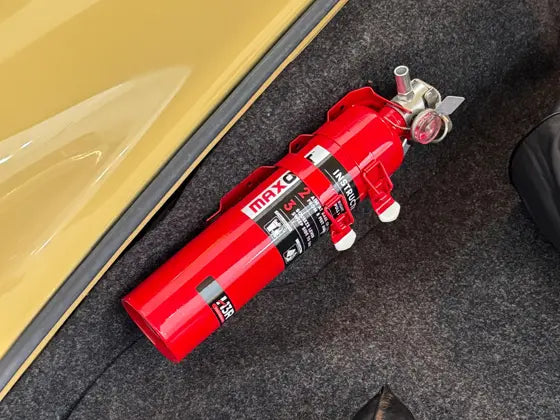
Beneath the pilot’s seat was an H3R clean agent fire extinguisher. Its compact size meant it could be mounted securely without interfering with seat movement. That’s an important consideration in aircraft, where seats are adjusted every flight.
Just as important, it was positioned close at hand for fire emergencies.
“You need to be able to reach it while you’re strapped in,” William said.
Immediately, he was able to extinguish the fire before it could spread to hoses, wiring, or surrounding components.
The entire incident lasted only seconds. But if he hadn’t been prepared that day, the outcome could have been very different.

“There was no damage,” he recalls, and no mess. “I was able to do a simple inspection, and she was ready to fly again.”
Aircraft contain sensitive avionics, electrical systems, and confined spaces where traditional dry chemical extinguishers can create more damage than the fire itself. Dry chemical residue can corrode components, contaminate electronics, and require extensive cleanup.
That’s why William had specifically chosen a clean agent extinguisher for his plane.
There’s a common myth that clean agent fire extinguishers “suck the air out” of enclosed spaces or make them unsafe to breathe in. In reality, clean agents don’t displace oxygen. They interrupt the chemical reaction of fire, which is why they’re trusted in aircraft, where visibility and breathable air matter. Just as important, they leave behind no residue and don’t obscure vision during use.
William never expected to need his clean agent fire extinguisher. But after using it, one thing became clear: he never wanted to be without one again.
“After you’ve had to use an extinguisher,” William said, “you really don’t want to not have one.”
H3R’s Emergency Replacement Guarantee ensured a new extinguisher was on its way quickly, restoring that peace of mind.
“If I have to put a fire extinguisher in anything else, it’s going to be another clean agent," he said. "You’re able to go right on about your life very quickly because there’s no cleanup. I would say that’s a huge win.”
“If you’re thinking that you may need a fire extinguisher, that tells me there’s something you’ve already identified as a concern, and you just need to buy one. I chose H3R because of the dustless factor of clean agent extinguishers.”
— William Crawford
Fire Protection Without the Mess
Whether it's a car, an aircraft, a boat, or any kind of vehicle, protect what matters with a clean agent fire extinguisher backed by H3R’s Emergency Replacement Guarantee.
| GET PROTECTED |